Showing posts with label LGBT. Show all posts
Showing posts with label LGBT. Show all posts
Thursday, June 9, 2016
A little late, but release day for me!
My most recent published piece, a short story called Watch the World Burn, went up on Indestructible Spec, an e-zine for speculative LGBT stories. You can read it for free here!

Saturday, January 9, 2016
Book Review: Bottled Up Secret by Brian McNamara
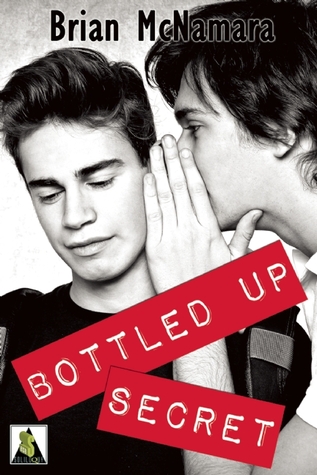
Brendan Madden is in the midst of his senior year of high school and couldn’t be happier. He has a great group of friends, his pick of colleges, and he has recently come to terms with his sexuality. One night, he meets Mark Galovic, a gorgeous, younger classmate of his. In a matter of minutes, Brendan is hooked. As the friendship between them grows, Brendan reaches his breaking point when he spontaneously confesses his feelings to him. Brendan is shocked and elated to find out that Mark feels the same way about him. The two begin to date, but because Mark is not out, it must remain a secret. As their friends and family become suspicious, openly gay Brendan becomes increasingly frustrated with their discreet relationship, while Mark becomes more and more paranoid that they’re going to be found out.
A free copy was provided to me through Netgalley in exchange for a review.
Alright so this review is going to start with a story. When I was in college, the popular thing was to post your writing to FictionPress. It was a sometimes simple display site that separated your work by genre. I posted slash, otherwise known as gay romance. Make no mistake, I read it as well, and I was friends with plenty of other people who posted their own.
At least from what I saw, it was most common to have the main characters either high school or college age, making things roughly YA. This was 2008 through 2010 that I was really active on this site, so a few years ago (five years is a long time in internet time). Why am I mentioning this?
Because Bottled-Up Secret honestly reads like something I would have read on Fictionpress. A main character who isn’t stated to be upper class but spends money like he is, main character and friends who think they’re so OMG RANDOM AND WEIRD, a parent who is hardly characterized beyond their irrational disapproval of their child’s sexuality, love at first sight, tons of tell-not-show, manufactured drama, guy who went out with girls and the MC is the first guy he’s ever had feelings for, keeping their relationship a secret for no real reason, biphobia and no real climax. In fact, if I’d made a Cliché Slash Story Bingo Card, the only thing missing would’ve been strange names.
FictionPress was a dark time for me now that I look back on it, to be honest.
Given all this, I have to say I have no idea how this book got published. It really does read exactly like something from back then. It could’ve been an okay if mindless romance story, but it’s marred by uncreativity and a horrible need for some actual editing. I didn’t connect with any characters and didn’t really see what the big deal is with any of their problems.
In other words, I would definitely give this one a pass.
Friday, January 8, 2016
Maxine Wore Black by Nora Olsen
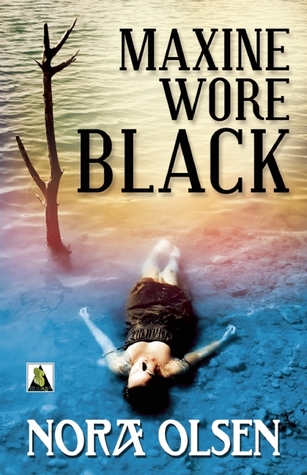
Maxine is the girl of Jayla’s dreams: she’s charming, magnetic, and loves Jayla for her transgender self. There’s only one problem with Maxine—she already has a girlfriend, perfect Becky.
Jayla quickly falls under Maxine’s spell, and she’s willing to do anything to win her. But when Becky turns up dead, Jayla is pulled into a tangle of deceit, lies, and murder. Now Jayla is forced to choose between love and the truth.
Jayla will need all the strength she has to escape the darkness that threatens to take her very life.
A free proof copy was provided to me through Netgalley for review.
Maxine Wore Black is such an issue book that it practically radiates it. It’s based off (or is an homage, or retelling, or whatever) another story called Rebecca, though I’ve never read it so I’m going in blind and can only base this review off of the book itself and not that context.
There is plenty to like about Maxine Wore Black. It deals with a lot of issues and puts them in your face rather than trying to make light of them. And I really liked the parts where Jayla is taking care of kids, because even when tensions are high otherwise, it shows a part of her that lets us know she is a responsible, perfectly capable person.
Unfortunately, I’ve spent a lot of time on Tumblr and it felt like reading a blog of people derisively called Social Justice Warriors at times, especially when she approaches Francesca for help getting out of her situation with Maxine and the argument that ensues. Not that the arguments are always invalid, but scenes like that, and also the climax when Danny shows up, are just incredibly melodramatic to the point where you wonder if the author actually wanted us to take it seriously or not (probably she did, and that makes it worse).
In other words, there are plenty of gems in this book, but pivotal scenes don’t have the sort of impact they’re supposed to and so it sort of ruins the flow and impact of it all. If you’re more tolerant of soap opera-level drama, be my guest and pick it up.
Tuesday, January 5, 2016
This Is Where It Ends by Marieke Nijkamp

10:00 a.m.
The principal of Opportunity, Alabama's high school finishes her speech, welcoming the entire student body to a new semester and encouraging them to excel and achieve.
10:02 a.m.
The students get up to leave the auditorium for their next class.
10:03
The auditorium doors won't open.
10:05
Someone starts shooting.
Told over the span of 54 harrowing minutes from four different perspectives, terror reigns as one student's calculated revenge turns into the ultimate game of survival.
A free copy was provided to me through Netgalley in exchange for a review.
This Is Where It Ends is actually being released this month (January, if you’re reading this review late) and it comes at a time when mass shootings are a hot button topic in America. All in all, I feel like this treated it relatively well. The biggest issue with people trying to figure out a mass shooter is them blaming it on mental disorders, and as far as I can recall, it never once mentions it, or at least tries to use it as an excuse with Tyler. Things have been going badly in his life, but no one thinks that’s an excuse for trapping everyone in the gym and picking them off (the final count at the end of the book is thirty-nine, with twenty-something injured).
The book is told from several points of view, and unlike so many books that head hop, I felt like it mostly worked. Supplemented with social media accounts at the end of every chapter (mostly Twitter, with a blog every now and then) it definitely had the feel of a book that takes place in modern times as well, rather than someone trying to write a book about modern teenagers but using their own childhood a few decades ago as the springboard.
Besides treating the issue of school shootings pretty well, a selling point with this book has to be its diversity. Two of the points of view are girls who are in a romantic relationship with each other, two more are a brother and sister who are some sort of Hispanic (people who know the language better might be able to tell what country from the phrases and wording they use) and the brother is friends with a boy from Afghanistan. So if you’re looking for an issue book with a diverse cast where their diversity isn’t the issue, I’d say give this one a try and see how you like it.
Tuesday, September 22, 2015
Book Review: The Before Now and After Then by Peter Monn

Danny Goldstein has always lived in the shadow of his identical, twin brother Sam. But when a hurricane of events forces him into the spotlight, he starts to realize that the only thing he’s truly afraid of is himself.
With the help of his costume changing friend Cher, a famous gay uncle with a mysterious past of his own, two aging punk rocker parents and Rusty, the boy who will become his something to live for, Danny begins to realize that the music of the heart is truly the soundtrack for living.
Received from Netgalley in exchange for a review.
I wanted to like this book. And there were times where I did, but
unfortunately they were very few and mostly clustered in the beginning and end.
The writing was… very mediocre. It had the problem of way over-sharing. It was more like a bulleted list of “this
happened, and then this, and then this” where a lot of the non-essential events
that did nothing but fill the gaps between actions could have been cut. And of course related to this, it tended to
gloss over important things. They spend
time being excited about something, and then it happens but it only takes about
a paragraph, literally “And then this happened” and a scene change sometimes.
It was also extremely cheesy. I felt like I was reading a daytime soap
opera instead of a young adult novel about teenagers who would never talk like
that. There was simply too much effort
put into making them seem like they were in love and apparently not enough
thought into the actual book and its plot.
One of the consistency problems I had is a spoiler so
tread with care. Danny’s friend share
ends up being pregnant and it turns out she’s an entire three months
along. She says she had been suspecting
for a while and after she gets over the shock, Danny says she is “Almost like
the old Cher.” Except he never knew the old Cher. If she was preparing for the prospect that
she could be pregnant that’s all he knew of her- and this entire book takes
place, except for the last chapter’s time skip, over the course of about two
weeks.
There’s also the smaller one where Danny asks about and
is told TWICE that his mom, her best friend and his father are reforming a band
they had in college. Listen if you’re
going to ask a question Danny, because otherwise I’m chalking it up to bad
editing.
Honestly it’s not bad and most inoffensive towards the
groups it’s trying to support so it isn’t a complete flop. But it reads a lot more like a first draft
than it should.
Friday, April 12, 2013
Book review: Almost Perfect by Brian Katcher

Logan Witherspoon recently discovered that his girlfriend of three years cheated on him. But things start to look up when a new student breezes through the halls of his small-town high school. Sage Hendricks befriends Logan at a time when he no longer trusts or believes in people. Sage has been homeschooled for a number of years and her parents have forbidden her to date anyone, but she won’t tell Logan why. One day, Logan acts on his growing feelings for Sage. Moments later, he wishes he never had. Sage finally discloses her big secret: she’s actually a boy. Enraged, frightened, and feeling betrayed, Logan lashes out at Sage and disowns her.
But once Logan comes to terms with what happened, he reaches out to Sage in an attempt to understand her situation. But Logan has no idea how rocky the road back to friendship will be.
I had mixed feelings about Almost Perfect. Mostly about the main character. While it would be a very boring book to just have him accept Sage right away and be done with it, I had very little sympathy for him even though it seems like we're supposed to in the end. The entire plot consists of Logan liking Sage, then finding out she's transgender, then hating her, then liking her. The like-hate cycle repeats throughout the book and is the main conflict. There are asides, such as Sage's parents being ambivalent/unaccepting of her status as transgender, but that's another problem with it.
The author's note in the back of the book says that Katcher talked to actual transgender teens and a lot of the things that happen in the book were taken from their real experiences, but I feel like he just put them in without putting in the emotional impact that would've gone with them. While not being an entirely bad person, Sage's father is the standard 'doesn't get it' parent any teen with an alternate sexuality or gender identity is afraid of having. As I stated before, there wasn't much sympathy coming from me for Logan and his perpetual acceptance-non-acceptance cycle. In the end he swears that he'll stick with Sage and honor her wishes no matter what, but he said that before, too. In the end, when Sage isn't there to graduate with the rest of the class, Logan goes on about how she clearly had an impact on everyone when that isn't really shown at all beyond him and his small group of friends.
I guess in the end, I mostly feel like Katcher tried to create a realistic and emotional story, but he didn't spend enough time thinking about the emotional part that would help people connect with what happens to Sage and Logan. It was a nice effort, but it fell sadly short.
Thursday, March 21, 2013
On writing LGBT YA books
In every area of writing, you find things that you shouldn’t
do. My specialty is young adult,
specifically writing YA novels with protagonists who are on the LGBT
spectrum. The internet has created a
bigger literacy of the terms among people who aren’t on the spectrum. There’s nothing wrong with that, of course,
and the focus of this article isn’t on the allies but on writers in general.
What shouldn’t you do
when writing a novel that has an LGBT lead?
Well the things vary.
LGBT stands for “lesbian, gay, bisexual, transgender” which are all
different experiences a human can have, even if the first three might seem the
same to some. Like any human experience,
though, no two people going through the same one are going to have the same
story. What one person sees as
stereotypical and degrading, another finds as their truth. Stereotypes do often come from (stretched)
truths at first, and to dismiss someone’s experience is to do them a
disservice.
There are butch lesbians, effeminate gay men, bisexuals who
enjoy a life of sex with both men and women, and transgender people who follow
all the usual tropes of “feeling different” from a young age.
But that shouldn’t be all of who they are. It’s true that many people with differing
sexualities and gender identities participate in pride parades, in gay-straight
alliances, in rallies for their country’s government to give them the same
rights that are afforded to everyone else.
However, have you honestly ever met someone whose entire existence
revolved around being different? What a
boring existence that would be, though I suppose this is where a hipster joke
would go, huh?
Just because a
character is different doesn’t mean you have to make them dwell on it the
entire book, putting every free thought and moment into pounding it into our
heads that they’re trans* or bisexual or anything.
With the uprising of self-publishing, you find more and more
books with main characters who are on the LGBT spectrum, and that’s a good
thing. Commercial publishing houses aren’t
always willing to take the risk of straying too far from the norm, not because
they don’t want to, but they don’t have the faith that they’ll sell enough for
it to be worth putting all the effort a commercial publishing contract entails
just for one book. Any company’s bottom
line is its profit, after all, and in a society that is progressively becoming
more accepting, the story of a white, straight girl falling for a handsome guy
who sweeps into her life sells better.
I’m not saying issue books don’t have their places. But we as a society are never going to get
past seeing other sexualities and gender identities as different if that’s all
that’s portrayed in fiction, which is more readily accessible to us than real
life examples; only about one in ten people are gay, which is quite a high
number in the big scheme of things, but statistics don’t tell us the whole
story. You could have a whole town made up mostly of those groups of nine
people, especially here in Maine where some town populations barely reach a
thousand. And while it’s true that
sexuality is fluid, you’re more likely to meet an openly bisexual or gay person
who admits that than someone secure in their heterosexuality. Gender tends to be less so, from a
combination of society’s expectations and how a person feels about it
themselves.
Teenagers are more accepting of things that their parents
and grandparents will shun. While not
all know exactly what to do or how to voice this, there’s still the chance in
there to let them know that being accepting their gay friend or their trans*
friend is okay, and doesn’t need to be a big deal. Someone being on the LGBT spectrum doesn’t
stop them from doing anything their friend who’s not can do. So why aren’t there more books where an LGBT
teenager worries about college, or is suffering a broken heart, or tries to
mend their life after the death of a close friend or family member? Why aren’t there more books where what they
do is more of important than who they are?
My guess is that it’s because with all the hoopla about gay
rights and marriage and the effort to suppress them, society has shown us that
it DOES matter that we’re different. It
extends everywhere, from looks to body type to things you have control over,
such as your past times. Comic book
conventions aren’t seen as a gathering of people who appreciate the arts, but
as a smelly, geekish festival to be mocked and avoided. I would, personally, love to go to
Comic-Con. I pity the soul who wouldn’t!
Comic book fans might get ferocious, but they have just as much excitement in
their eyes when they meet Stan Lee as a teenage girl might get if they had the
chance to go backstage with One Direction, or any other singer or band that’s
popular right now.
People might be different from you, but they still enjoy
doing things. They’re not trying to
oppress you by being LGBT or black or a comic fan. They’re happy being left alone so they can
live their lives as they see fit. And
that more than likely involves wondering what to have for supper more often
than “What gay thing can I do today?”
Just think about it next time you read a gay YA book and
have to consider how realistic you think it is.
Subscribe to:
Posts (Atom)